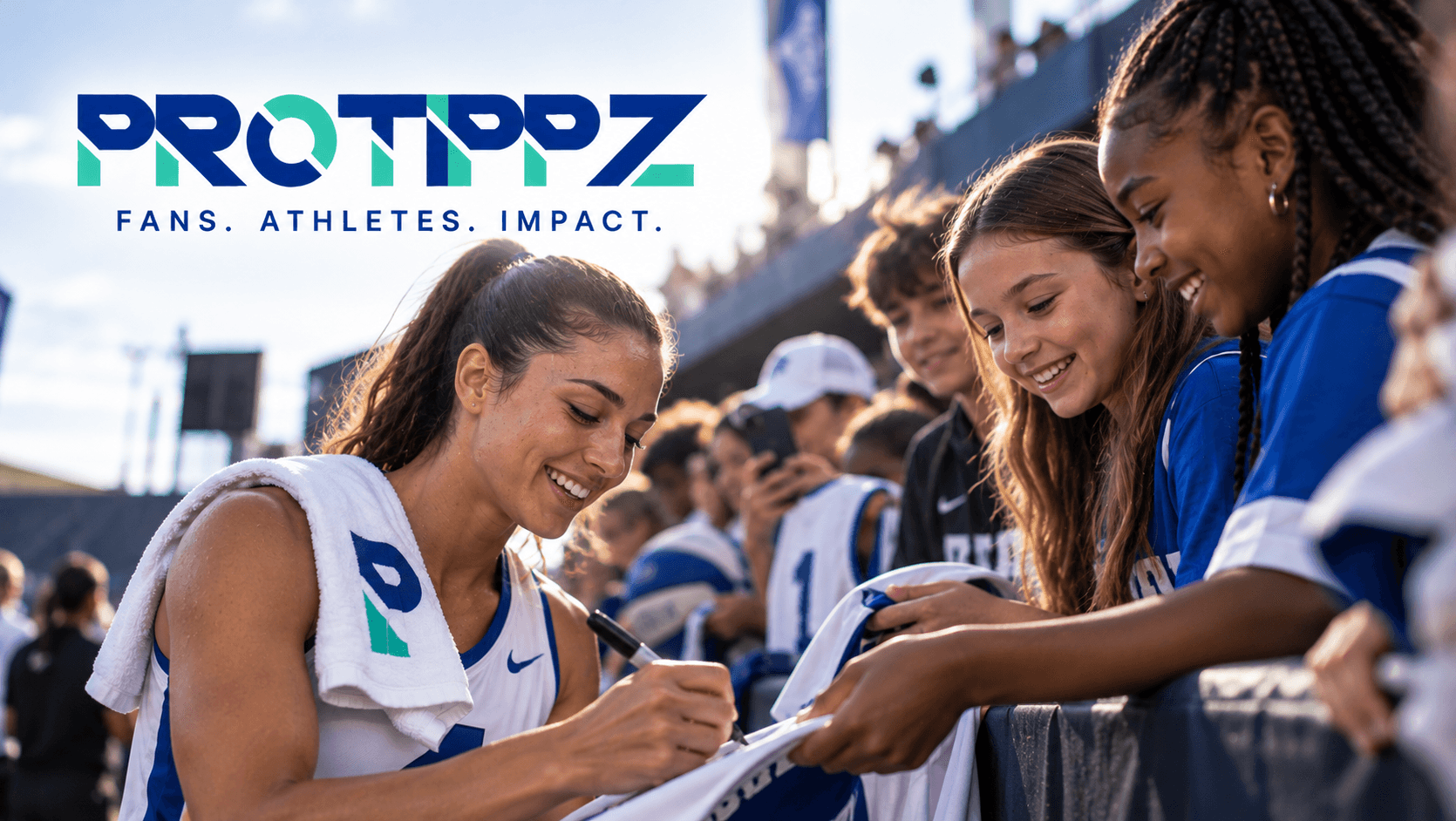
For decades, being a sports fan was relatively straightforward. You watched the games, bought tickets, wore your team's colors, and celebrated the wins. If you were fortunate enough to meet your favorite athlete, you might leave with an autograph or photograph.
Today, the relationship between athletes and fans looks considerably different.
Fans follow athletes on social media, watch their training routines, interact with their content, and stay connected long after the final whistle. College athletes are building personal brands before turning professional, while professional athletes are finding new ways to connect with audiences outside their teams and leagues.
For sports organizations, brands, and emerging technology companies, these changes have made fan engagement in sports an increasingly important part of the business.
The question is no longer simply how many people are watching. It's how those people participate, what keeps them interested, and whether that connection can extend beyond the game itself.
What Is Fan Engagement in Sports?
Fan engagement refers to the ways sports teams, athletes, leagues, and organizations build and maintain relationships with their supporters.
Traditionally, engagement was measured through attendance, television ratings, merchandise sales, and fan club memberships. Those measurements remain important, but they capture only part of how people experience sports today.
Digital platforms have introduced new opportunities for fans to participate through social media, interactive content, athlete communities, loyalty programs, rewards, and direct financial support.
A fan who watches a basketball game might also follow individual players, share highlights, participate in online discussions, purchase athlete merchandise, or support an athlete through a digital platform.
Each interaction represents another opportunity to strengthen the relationship.
For fans, the experience becomes more personal. For athletes and organizations, it creates opportunities to build relationships that extend well beyond a single game or season.
Sports Fans Are Becoming More Connected to Individual Athletes
Team loyalty has always been central to sports culture. Generations of fans have supported the same franchises, universities, and hometown teams.
That loyalty isn't disappearing, but individual athletes now command audiences of their own.
Social media has made it possible for supporters to follow an athlete's career from high school to college, through professional competition, and even after retirement.
Consider a college basketball player who develops a following through outstanding performances, community involvement, or an engaging social media presence. Her supporters may continue following her after graduation, whether she enters the professional ranks, transfers schools, or pursues opportunities outside basketball.
The relationship belongs, at least in part, to the athlete.
This creates an interesting business opportunity. Athletes with engaged audiences may be able to develop income streams and partnerships that are not entirely dependent on their teams, institutions, or traditional endorsement agreements.
As discussed in Why Athlete-Fan Engagement Matters More Than Sponsorships in Modern NIL, the relationship between athletes and their supporters is becoming an increasingly important part of modern athlete monetization.
NIL Has Changed the Conversation Around Athlete Monetization
The introduction of name, image, and likeness (NIL) opportunities in college sports marked a major shift in how student-athletes can benefit financially from their personal brands.
Since the NCAA adopted its interim NIL policy in July 2021, college athletes have been able to pursue certain commercial opportunities involving their names, images, and likenesses.
The landscape changed again in June 2025 when a federal court approved the House settlement, creating a framework that permits participating Division I institutions to provide direct financial benefits to student-athletes.
These developments have expanded the economic opportunities available to college athletes, but they have also raised questions about how those opportunities are distributed.
Athletes competing in nationally televised sports or attending major athletic programs may attract significant commercial interest. Others, including athletes in less-publicized sports and smaller programs, may have fewer opportunities to secure traditional sponsorships.
That doesn't necessarily mean they lack dedicated supporters.
A volleyball player, track athlete, gymnast, or softball player might have a smaller audience than a nationally recognized football star, but that audience can still be meaningful.
The challenge is finding practical ways to connect those supporters with the athletes they want to support.
The article How Athletes Make Money From NIL: A Complete Breakdown, published by Raines Legal Group, examines the various income sources available to athletes, including endorsements, social media, institutional payments, merchandise, and direct fan support.
This broader approach to athlete income is becoming increasingly relevant as college sports continues to evolve.
From the Creator Economy to the Fan Economy
The creator economy has demonstrated that individuals can build businesses around direct relationships with their audiences.
Musicians, artists, educators, and digital creators increasingly use subscriptions, memberships, digital products, and direct audience support to generate income.
Athletes are beginning to explore similar opportunities.
Their audiences may be built around competition rather than traditional content creation, but the underlying relationship is familiar. Supporters become interested in an individual, follow their progress, and look for ways to participate in that person's success.
This emerging relationship is part of what can be described as the fan economy.
Within sports, the fan economy represents the commercial and social activity generated by the relationships between athletes, teams, organizations, and their supporters.
It includes traditional revenue sources such as tickets and merchandise, but also newer opportunities involving digital communities, athlete-led content, rewards, experiences, and direct financial participation.
Importantly, the fan economy doesn't require every athlete to become a celebrity.
A smaller, highly engaged audience may offer meaningful opportunities when supporters have accessible ways to participate.
The long-term question is how sports technology companies can make those interactions convenient, rewarding, and sustainable for everyone involved.
Where PROTIPPZ Fits Into the Changing Sports Landscape
One company exploring this opportunity is PROTIPPZ, an Atlanta-based sports technology platform founded by Cory D. Raines.
PROTIPPZ is designed to connect fans with athletes through direct tipping, athlete discovery, and fan rewards.
The concept builds on a familiar behavior: sports fans already spend money supporting the athletes, teams, and communities they care about.
PROTIPPZ introduces another way to participate by allowing fans to find athletes and send financial support through the platform.
The experience also incorporates a rewards component, giving fans an additional reason to engage rather than treating every interaction as a one-time transaction.
For athletes, the broader opportunity involves developing relationships with supporters and exploring income sources beyond conventional sponsorships and endorsement deals.
Raines, whose professional background includes law, business, and entrepreneurship, founded PROTIPPZ to explore how technology could create additional opportunities for athletes to monetize their audiences.
His work at the intersection of sports, business, and emerging technology has also informed his writing on NIL and the changing economics of college athletics.
A more detailed examination of the company's origins and business model appears in What Is PROTIPPZ? How Cory D. Raines Is Transforming NIL and Fan-to-Athlete Support.
Readers can also explore Meet PROTIPPZ: Cory Raines and the Fan Economy in Sports, which introduces the company's broader vision for fan participation and athlete support.
PROTIPPZ remains an emerging business, and its long-term success will depend on attracting athletes, building active fan communities, and demonstrating that supporters return and engage consistently.
Nevertheless, the concept reflects a broader direction in sports technology: moving beyond passive audiences toward more direct participation.
Why Fan Engagement Has to Benefit Both Sides
For any fan engagement platform to succeed, it must offer something meaningful to both athletes and supporters.
Athletes may value additional income, greater visibility, and opportunities to develop their personal brands.
Fans, however, need reasons to participate beyond simply being asked to spend money.
Those reasons can include discovering emerging athletes, earning rewards, gaining recognition for their support, participating in communities, or feeling more connected to the sports they follow.
The strongest engagement strategies recognize that fans have different motivations.
Some supporters want exclusive experiences. Others enjoy collecting rewards, following statistics, or discovering athletes before they become household names.
Still others simply want to show appreciation for a memorable performance.
A successful platform needs to understand these differences rather than assuming every sports fan behaves the same way.
This is especially important for emerging businesses. Attracting a large number of registrations may demonstrate initial interest, but sustained engagement provides a stronger indication that users are receiving value.
The ability to convert occasional visitors into active participants could become one of the defining challenges for the next generation of sports technology companies.
Women's Sports Present an Important Opportunity
The growth of women's sports has brought renewed attention to athlete visibility, commercial investment, and fan engagement.
Professional leagues, college programs, and individual athletes are benefiting from growing audiences and increased interest from sponsors and media companies.
However, the commercial opportunities associated with that growth are not necessarily distributed evenly.
While prominent athletes may attract major endorsement agreements, many others continue competing with substantially less exposure.
Direct fan engagement could help create additional opportunities for athletes across different sports and levels of competition.
It also gives supporters more ways to participate in the growth of women's sports beyond attending games or purchasing merchandise.
For companies such as PROTIPPZ, women's sports represent an important opportunity to connect passionate fan communities with athletes who may benefit from additional visibility and direct support.
The broader opportunity extends beyond any single league or sport.
As sports audiences become increasingly connected to individual athletes, platforms that facilitate those relationships may find applications across college and professional athletics.
The Future of Fan Engagement Will Be Measured by Participation
The sports industry has traditionally placed considerable emphasis on audience size.
Attendance, television ratings, streaming figures, and social media followers remain essential indicators of popularity and commercial value.
But audience size alone doesn't reveal the strength of the relationship between a fan and an athlete.
Two athletes might have similar follower counts while generating very different levels of interaction, loyalty, and financial support.
For emerging sports platforms, understanding that distinction will be increasingly important.
A useful fan engagement strategy should consider how often supporters return, whether they interact with multiple athletes, what motivates them to participate, and whether those interactions produce meaningful value.
Technology can help facilitate these relationships, but the underlying motivation remains human.
Fans remember the game-winning shot, the unexpected upset, the championship run, and the athlete who overcame extraordinary odds. Those moments create connections that can last for years.
The opportunity for sports technology is to make it easier for fans to act on those connections.
A More Participatory Future for Sports
Sports fandom has never been entirely passive. Fans have always influenced the atmosphere, culture, and economics of the games they love.
What is changing is the number of ways they can participate.
Athletes have more opportunities to develop their own audiences. Fans have more ways to connect with them. Sports organizations and technology companies are experimenting with new business models built around those relationships.
Not every platform or monetization model will succeed, and the long-term economics of direct fan support are still developing.
But the underlying shift is difficult to ignore.
The relationship between athletes and fans is becoming more direct, more personal, and increasingly important to the business of sports.
For companies such as PROTIPPZ, the opportunity is to help turn that relationship into meaningful participation for both sides.
Explore PROTIPPZ and discover a new way to support the athletes you follow.
For additional background, read PROTIPPZ Revolutionizes Sports Economy With Fan-Powered Athlete Support.
Follow PROTIPPZ on LinkedIn, Instagram, Facebook, and X for updates on fan engagement, athlete monetization, NIL, and the evolving sports economy.
Comments (0)
No comments yet. Be the first to start the discussion!